
Buscar
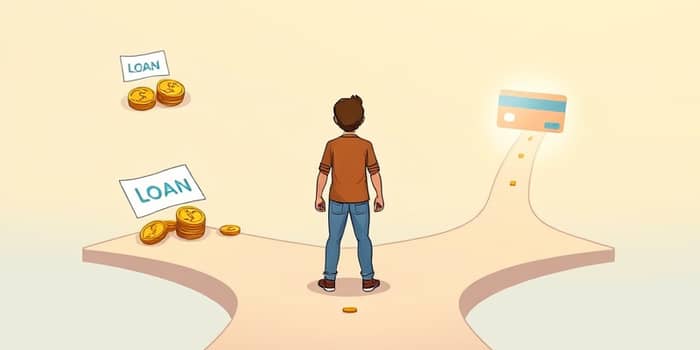
In today's fast-paced financial landscape, making smart borrowing decisions is crucial for achieving stability and growth. When faced with expenses, whether planned or unexpected, two common options often come to mind: personal loans and credit cards. Each has unique features that can either propel you toward your dreams or lead to financial stress if misunderstood.
Understanding these tools is not just about numbers; it's about aligning them with your life's specific goals and discipline. This article will guide you through the nuances, helping you choose wisely and confidently.
By the end, you'll have a clear roadmap to optimize your financial health and avoid common pitfalls.
Personal loans provide a lump sum of money upfront, which you repay in fixed monthly installments over a set period. They typically require a good credit history and proof of income, making them ideal for large, planned expenses like buying a car or funding education.
In contrast, credit cards offer a revolving line of credit that you can access repeatedly up to a limit. You only pay interest on the amount used if you don't pay the balance in full each month. This flexibility makes them perfect for daily or emergency spending.
The key difference lies in how funds are disbursed: loans give you everything at once, while credit cards provide ongoing access.
To make an informed decision, it's essential to compare personal loans and credit cards side by side. The table below summarizes critical aspects based on average data and common features.
This comparison highlights why the Annual Percentage Rate (APR) is a reliable metric for cost evaluation. It includes all fees, making it easier to compare options.
Both personal loans and credit cards come with their own set of pros and cons. Understanding these can help you weigh your options effectively.
For personal loans, the advantages include:
However, there are downsides:
Credit cards, on the other hand, offer:
Their disadvantages include:
Choosing between a personal loan and a credit card depends largely on your specific financial situation and goals. Here are some scenarios where each option shines.
Personal loans are best suited for:
Credit cards are ideal for:
Consider factors like the amount needed, repayment timeline, and your financial discipline. For example, if you need a fixed sum for a planned expense, a loan is often more economical. If you require ongoing flexibility, a credit card might be better.
To navigate this decision effectively, follow these practical steps that can enhance your financial well-being.
First, assess your income and expenses honestly. This helps determine what you can afford to borrow without strain.
For large, planned expenses, prioritize personal loans due to their lower overall costs and structured repayments.
For smaller, variable costs, use credit cards but aim to pay the balance in full each month to avoid high interest.
Minimize costs by comparing APRs from multiple lenders and avoiding unnecessary fees.
Strengthen your financial discipline by setting clear goals and monitoring your spending habits regularly.
Explore alternatives like quick loans for urgent needs or family loans with formal agreements for better terms.
Remember, the goal is to optimize your borrowing strategy for long-term success.
Beyond personal loans and credit cards, other options might suit specific needs. Here's a brief overview to broaden your perspective.
Understanding these can help you make more informed comparisons and choices in your financial journey.
In summary, personal loans and credit cards each have distinct roles in personal finance. By leveraging their strengths wisely, you can achieve greater control and freedom.
Focus on aligning your borrowing with your life's priorities, whether it's funding a dream or managing daily costs. With the insights from this article, you're now equipped to make decisions that not only meet immediate needs but also foster long-term financial health.
Take action today by evaluating your options and embracing a proactive approach to money management. Your future self will thank you for the clarity and confidence gained.
Referencias